
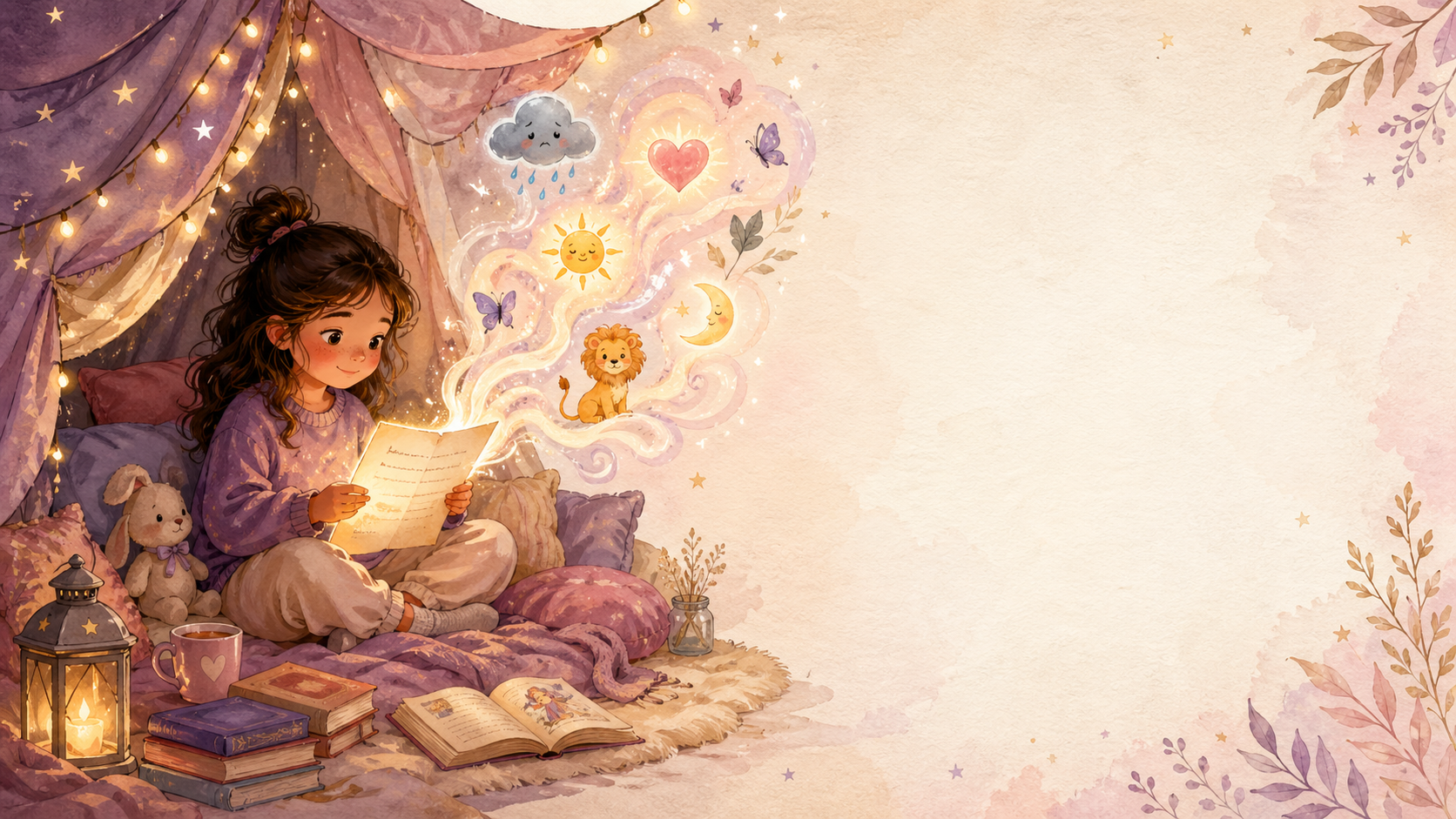
Why Big Feelings Can Be Hard for Children to Understand
Children feel things deeply. Joy can become bouncing-off-the-walls excitement. Sadness can feel like the end of the world. Anger can arrive like a tiny thunderstorm wearing school shoes.
Big feelings are completely normal, but they can be confusing for children. They may not yet have the words to explain what is happening inside them. A child might say they feel “bad” when they actually feel worried, jealous, disappointed, embarrassed, tired, or overwhelmed.
This is where stories can help.
Big feelings stories give children a gentle way to explore emotions through characters, adventures, and imagination. Instead of turning feelings into a serious lecture, which is usually where children mentally climb out of the nearest window, stories make emotions easier to notice, name, and understand.
Stories Help Children Put Feelings Into Words
One of the most important parts of emotional learning for kids is building a vocabulary for feelings.
Children’s stories about emotions can show characters feeling nervous, angry, left out, proud, worried, brave, sad, excited, or unsure. When children see those feelings in a story, they can begin to recognise them in themselves.
A child might think:
“I feel like that sometimes.”
“That character is worried.”
“I know what it feels like to be cross.”
“I think they need someone to help them.”
These small moments matter. They help children connect words to feelings, which makes emotions less mysterious and less frightening.
Once a child can name a feeling, they can begin to talk about it.
Big Feelings Stories Make Children Feel Less Alone
Children can sometimes believe they are the only one who feels a certain way.
They may think nobody else gets scared at bedtime, nervous before school, angry when plans change, jealous of a sibling, or sad when something feels unfair.
Big feelings stories gently show children that emotions are part of being human.
When a character feels the same way they do, children feel understood. The story quietly says, “You are not strange. You are not the only one. This feeling makes sense.”
That kind of reassurance can be incredibly comforting.
And because it happens through a story, it does not feel forced. No awkward chair-based “let’s talk about your feelings” meeting required. Humanity survives another day.
Children’s Stories About Emotions Create Safe Conversations
Some children find it difficult to talk directly about their feelings. If you ask, “What’s wrong?” the answer may be “nothing,” even while their face says the entire kingdom has fallen.
Stories can make these conversations easier.
After reading a story, an adult might ask:
“Why do you think the character felt sad?”
“What helped them feel better?”
“Have you ever felt like that?”
“What would you say to them if they were your friend?”
This allows children to talk about the character first. That little bit of distance can make emotional conversations feel safer.
Often, once a child starts talking about the story, they may slowly begin talking about themselves too.
Stories Can Teach Children That Feelings Change
For children, big feelings can feel permanent. When they are sad, they may feel like they will always be sad. When they are angry, the anger can feel huge and impossible to move around.
Good emotional stories show children that feelings come and go.
A character may begin a story feeling worried, frightened, jealous, lonely, or cross. Through the story, they might find comfort, ask for help, take a brave step, make a mistake, apologise, try again, or learn something new.
The feeling may not vanish instantly, because this is a story and not a suspiciously cheerful magic trick. But it can change.
That is an important lesson.
Children can learn that feelings are not enemies. They are signals. They can be listened to, understood, and managed.
Emotional Learning for Kids Works Best When It Feels Gentle
Children do not always need big explanations. Sometimes they need a soft doorway into understanding themselves.
Emotional learning for kids works best when it feels safe, simple, and kind. Stories are perfect for this because they do not demand answers. They invite children into a world where feelings can be explored gently.
A story about anger might become a tale about a little dragon learning how to cool its fiery breath.
A story about sadness might follow a lost star trying to find its way back to the sky.
A story about worry might show a fox carrying a tiny cloud until it learns how to let it rain.
These kinds of stories help children understand emotions without making the subject feel too heavy.
Big Feelings Stories Build Empathy
Children’s stories about emotions do not only help children understand themselves. They also help children understand others.
When children read about a character feeling lonely, embarrassed, scared, excited, or disappointed, they practise seeing the world from someone else’s point of view.
That helps build empathy.
A child may begin to notice when a friend feels left out. They may understand why someone is quiet, upset, or nervous. They may become better at thinking before they speak or offering kindness when someone needs it.
Stories are sneaky like that. One minute it is a magical fox and a moonlit path. The next minute, a child is learning emotional intelligence. Ridiculous. Effective, though.
Why Personalised Stories Can Be Especially Powerful
Personalised stories can make emotional learning feel even more meaningful.
When a child receives a story or letter written especially for them, it feels personal. Their name is there. The adventure feels closer. The message feels like it belongs to them.
That connection can make big feelings stories even more powerful.
A personalised letter might invite a child to help a worried character, encourage a lonely creature, solve a friendship problem, or discover how bravery can feel small at first.
The child becomes part of the emotional journey.
They are not just reading about kindness, confidence, worry, or courage. They are helping the story move forward.
That makes the lesson feel natural, not preachy.
How Legendary Letters Supports Emotional Learning
At Legendary Letters, stories are created to feel magical, personal, and full of heart.
Our storytelling approach can help children explore emotions through adventure, imagination, and gentle reflection. Instead of presenting feelings like a lesson, we weave them into characters, quests, letters, and story worlds children want to step into.
Through big feelings stories, children can begin to understand that emotions are normal. They can learn that it is okay to feel sad, worried, angry, nervous, excited, or unsure.
Most importantly, they can learn that feelings can be talked about.
And sometimes, the easiest way to start that conversation is with a story.
Perfect for Children Who Feel Things Deeply
Some children are especially sensitive. They notice everything. They feel changes strongly. They may worry, overthink, get overwhelmed, or find it hard to explain what is going on inside.
Children’s stories about emotions can be a gentle support for these children.
They can help them feel understood without feeling singled out. They can offer language, comfort, and hope. They can show that strong feelings are not bad feelings.
They are part of growing up.
And with the right support, children can learn how to carry those feelings in healthier, kinder ways.
Final Thoughts
Big feelings can be confusing for children, but stories can make them easier to understand.
Big feelings stories help children name emotions, talk about worries, build empathy, and feel less alone. They support emotional learning for kids in a way that feels gentle, imaginative, and natural.
A good story does not tell a child what to feel.
It gives them a safe place to explore what they already feel.
And sometimes, that is exactly what a child needs.
Suggested Call to Action
Help your child understand big feelings through magical, meaningful storytelling.
Explore Legendary Letters and discover personalised children’s stories designed to support reading, imagination, confidence, and emotional learning.